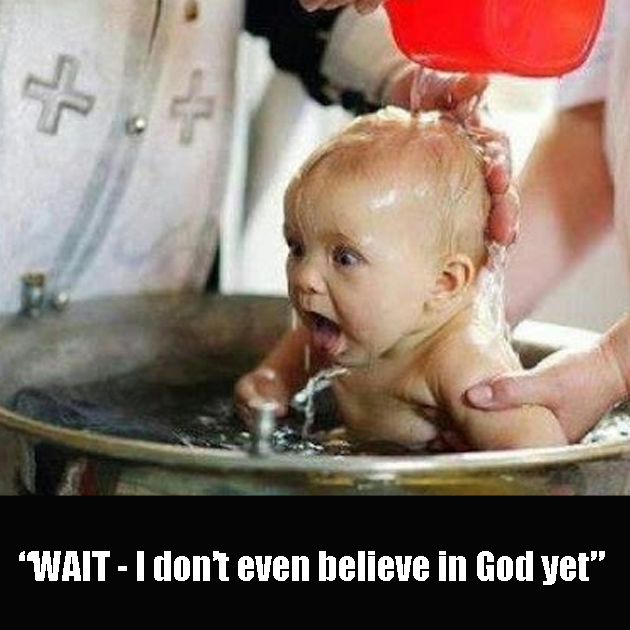
 A baby dedication is not an infant baptism or a christening… So what is it? What is the difference? Should we do it? How should we do it? Why should we do it? What does it mean for my child?
First, let’s understand infant baptism:
Infant Baptism
The practice where a local church baptizes (usually by sprinkling) infants who are born in to the church because their parents are believers and members.
- Makes baptism the outward New Testament “Sign of the Covenant” replacing circumcision from the Old Testament.
- There are “possible” cases (but none clear) in the NT (Acts 16:33)
- This has been a common practice for much of church history.
Positives & Negatives to Infant Baptism
(+) Meaningful inclusion of young children within the church family and an opportunity for pre-conversion discipleship to start at a young age.
(−) When one’s baptism is before personal faith and dependent upon the faith of parents it can lead to false or shaky assurance about personal salvation and an unclear personal testimony.
(−) It can be viewed as a saving work within church’s that erroneously teach works-based righteousness (i.e. Roman Catholics)
Since we are on the subject of baptism… What should we do with baptism? What does Fellowship Raleigh believe about baptism? We practice Believer Baptism:
Believer Baptism
The practice where a local church baptizes (usually by immersion) older children and/or adults who have experienced genuine personal conversion and are trusting in Jesus Christ.
- Very strong Biblical support and precedent. (Mt. 3:16, 28:19, Acts 2:38, 8:38, etc. etc.).
- Makes baptism the clear starting point of one’s new life in Christ and helps one to have a clear testimony.
Positives & Negatives
(+) Makes baptism the clear starting point of one’s new life in Christ and helps one to have a clear testimony.
(−) When this is all that is practiced (i.e. no infant baptism or dedications) there is no clear way that small children are meaningfully included in the covenant community of the local church.
Now… on to baby dedications…
Important: We practice baby dedications because we believe that Believer Baptism (see above) is by far the most helpful, Biblical, and clear practice for Christian baptism. For this same reason we do not practice infant baptism. However, we do believe there needs to be a clear, encouraging, and helpful way to celebrate and meaningfully include babies (of Christian church members) into the church body. These reasons lead to the fun, beautiful, and wonderful practice of baby dedications.
Baby/Child Dedication
The practice where a family dedicates their child to the Lord and enters a mutual commitment with their local church body to raise their child up in Gospel faith.
- This is NOT a baptism of any kind.
- While not a direct one to one, there is a precedent of parents dedicating their children in the Bible (1 S 1:28).
Positives & Negatives
(+) A baby/child dedication acknowledges and meaningfully includes small children in the church family without the confusion that can be brought in by infant baptism.
(−) There is not a command to do child dedications or rules for how to do them in Scripture, such as is the case with baptism and communion.
Two Reflections
(1) Freedom in Practice. Because there is no clear directives about baby dedications I would say that it is not mandatory for Christians or Churches to perform them. I would also say there should be much freedom in how they are practiced (i.e. it could be done on Sunday morning or in small group).
(2) Don’t get mad at me! If someone gets their child baptized or was baptized as a child I always respect that and do not want to give them a hard time at all about it. There is no doubt in my mind that it is a beautiful and meaningful ceremony. I really don’t have a problem with it at all, unless they are trusting in it for salvation. The big question I may gently ask would be: “What was or is the meaning of the infant baptism? What does it mean to you?” The answer will tell me everything. Often times, there is a really great answer (for which I would be thankful), yet many other times people are just doing it because “Dad, Mom, and Grandma kinda expected it” or because it was “the thing to do” or because they are “culturally religious.”
Hope this helps. Peace.
 Pastor Matt Schoolfield
Leave a comment